


VMware New 2021 3V0-643 Sample Questions Reliable 3V0-643 Test Engine
Feel VMware 3V0-643 Dumps PDF Will likely be The best Option
Objective 7.2 â Troubleshoot VMware NSX Connectivity Issues:
- Monitor and analyze virtual machine traffic with Flow Monitoring
- Troubleshoot virtual machine connectivity
- Troubleshoot dynamic routing protocols
Objective 7.1 â Troubleshoot Common VMware NSX Installation/Configuration Issues:
- Download Technical Supports logs from NSX Manager
- Troubleshoot NSX Manager services
- Troubleshoot Logical Router interface and route mappings
- Troubleshoot Logical Switch transport zone and NSX Edge mappings
- Troubleshoot NSX Controller cluster status, roles and connectivity
- Troubleshoot distributed and edge firewall implementations
- Troubleshoot host preparation issues
NEW QUESTION 10
You have been tasked with modifying an existing NSX API call to capture flow information for an organization. The existing API call is located on the ControlCenter desktop in a file name flowapi.txt.
The API call should be modified to collect Layer3 flow statistics between the dev-web-01a and the ControlCenter virtual machine.
Requirements:
vCenter: vcsa01a.corp.local
Credential: [email protected] / VMware1!
File location: flowapi.txt on the desktop of ControlCenter.
Modify and Save the existing API call to capture the requested information.
A REST Client has been added to Chrome and Firefox for this exercise.
Output the Response Body to a text file called apiresults.txt on the desktop of ControlCenter.
******************flowapi.txt***********************
https://<nsxmgr-ip>/api/2.1/app/flow/flowstats?contextId=datacenter-21&flowType=TCP_UDP&startTime
=0&endTime=
https://192.168.110.15/api/2.1/app/flow/flowstats?contextId=vm-26&flowType=Layer3&startTime=0&endT ime=1320917094000&
******************flowapi.txt***********************
HOL LAB for Practice:
See the explanation part for complete solution.
Answer:
Explanation:
SOLUTION:
Access the MOB by entering the following URL
https://vcsa-01a.corp.local/mob
[email protected]
VMware1!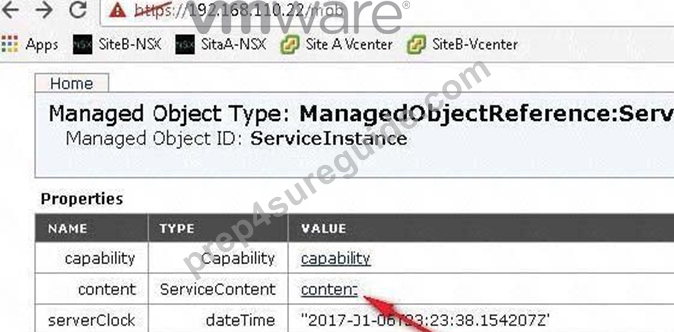


Note down the vm number of dev-web-01a (in exam its like vm-216)
Then update flowapi.txt as
******************flowapi.txt***********************
https://<nsxmgr-ip>/api/2.1/app/flow/flowstats?contextId=datacenter-21&flowType=TCP_UDP&startTime
=0&endTime=
https://192.168.110.15/api/2.1/app/flow/flowstats?contextId=vm-216&flowType=Layer3
&startTime=0&endTime=1320917094000&startIndex=0&pageSize=2
******************flowapi.txt***********************
Then go to RESTClient.
GET
https://192.168.110.15/api/2.1/app/flow/flowstats?contextId=vm-216&flowType=Layer3
&startTime=0&endTime=1320917094000&startIndex=0&pageSize=2
SEND
Copy the content of "Response Body"
Paste in notepad and Save As "apiresults.txt"on the desktop of ControlCenter.


NEW QUESTION 11
Provide automatic IP assignment for the servers on the DEV-DB-Tier-01-NEW segment.
Requirements:
vCenter: vcsa-01a.corp.local
Credentials: [email protected] / VMware1!
Edge: Dev-Edge
Automatically allocate IP addreesses in the 172.16.30.100-149 range.
Lease time: 1 hour
Ensure hosts that receive an IP assignment will be able to reach the other Dev subnets.
The legacyhost-NEW with the MAC address 40:00:00:00:00:01 must always be assigned 172.16.30.99 Ensure other parameters match those of the dynamic allocation mechanism (Task1).
Enable logging with the highest level of detail for automatic IP allocations.
Ensure all requirements have been met.
NOTE:
Do not configure DHCP Relay agent on the Dev-DLR-NEW as this will be done by another administrator.
HOL LAB for Practice:
DHCP and other questions 7, 8, 9
See the explanation part for complete solution.
Answer:
Explanation:
SOLUTION:

Add Pool as per given details:

Add Pool as per given details:


NEW QUESTION 12
Enable and configure cross vCenter support for and NSX implementation that contains two vCenter Servers:
vcsa-01a.corp.local and vcsa-01b.corp.local
Requirements:
vCenter: vcsa-01a.corp.local and vcsa-01b.corp.local
Credentials: [email protected] / VMware1!
NSX Manager Credentials: admin/VMware1!
The NSX Manager registered to vcsa-01a.corp.local should be responsible for all universal NSX objects.
A segment ID range of 16789-17563 is available for use with this exercise.
NOTE:
Allow time for synchronization to complete.
HOL LAB for Practice:
See the explanation part for complete solution.
Answer:
Explanation:
SOLUTION:
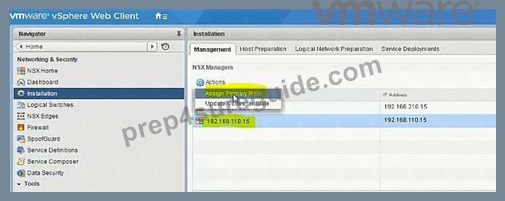
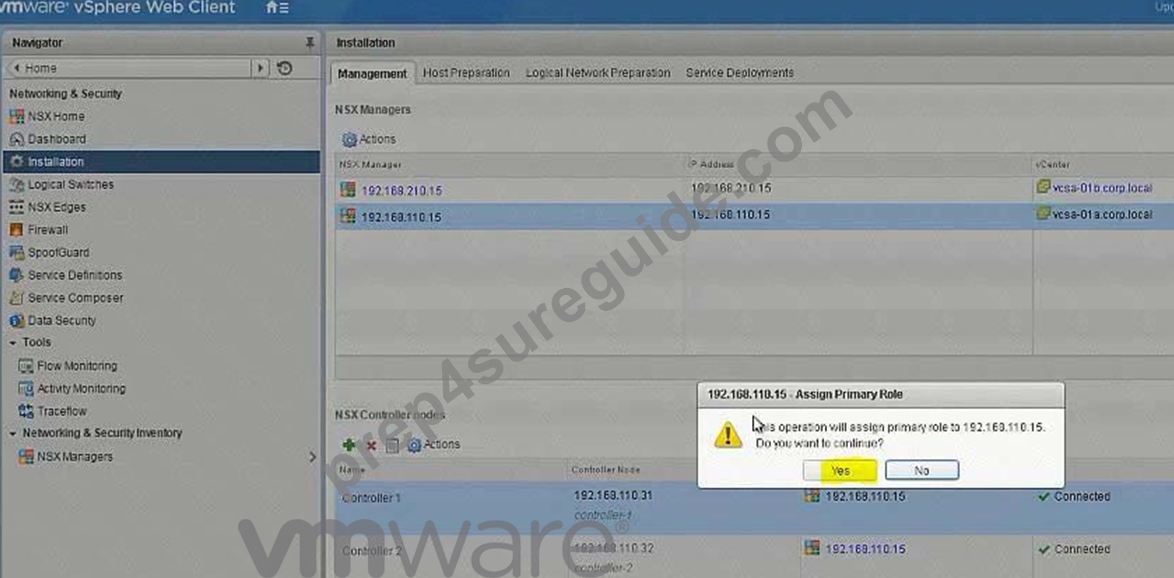
(1) select home. select installation select NsManager - b. select
logical network preparation tab. select segment ID. edit and enter pool id 6001-7000 do the same for Nsx MAnager -a and put pool id 5001-6000. be sure there is no overlaping of segment id in both the nsx managers.
(2) open Nsx Manager a and Nsx Manager B and start the universal synchoraniztion service from summary.
note: you can start the services in the beging to avoid any delay
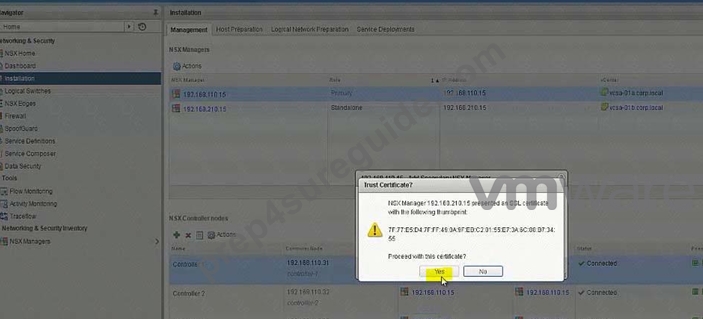
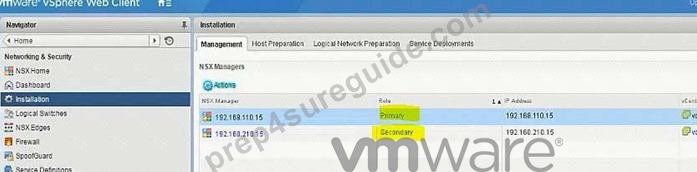
Assign Primary Role to 192.168.110.15


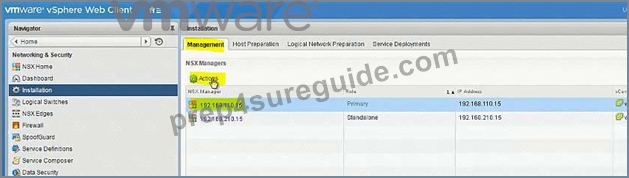
Add Secondary NSX Manager

NEW QUESTION 13
Create a security policy for specific web-based applications.
Requirements:
vCenter: vcsa-01a.corp.local
NSX Manager: 192.168.110.15
Credentials: [email protected] . VMware1!
New Security Policy Name: Web-Policy-NEW
New Web Security Group Name: Secure-Web-NEW
New NSX Tag: web-security-NEW
New App Security Group Names: Secure-App-NEW
Create a new security policy to deny HTTP/HTTPS from App server to the Web Server.
Create a new Security Group for the Web servers to meet the following requirements:
Existing and future virtual machines that have in their name dev-web should be added.
Any VM with a NSX tag of web-security-NEW should be added to this policy.
Ensure virtual machine dev-web-04a has been then tagged.
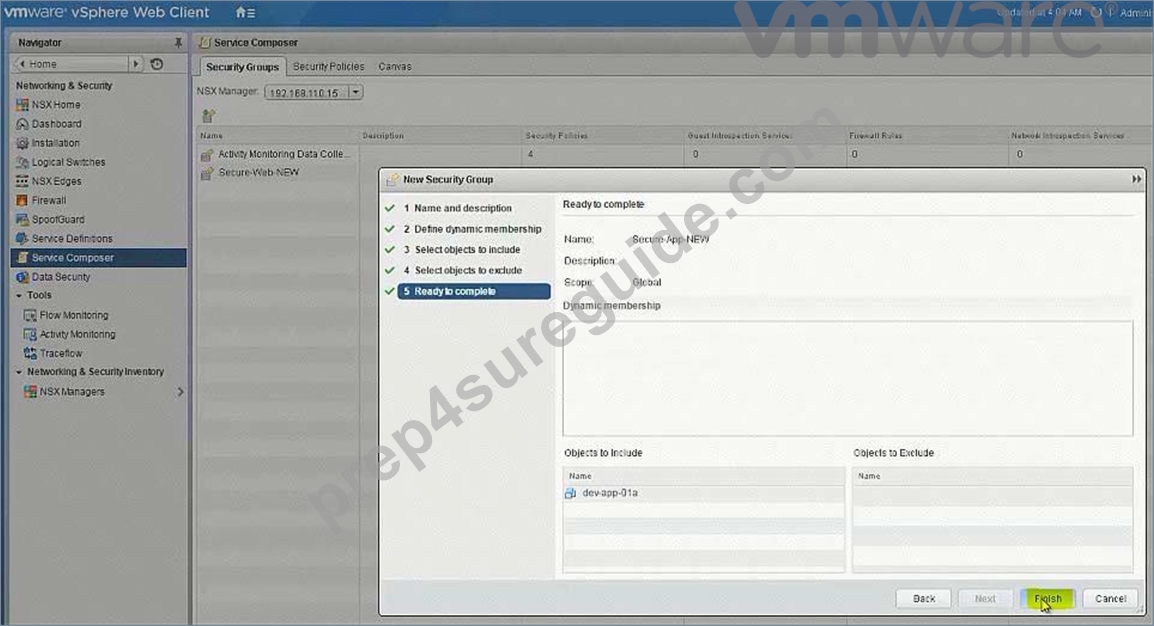
Create a new security group for the App server that has virtual machine dev-app-01a added.
HOL LAB for Practice:
See the explanation part for complete solution.
Answer:
Explanation:
SOLUTION:
Requirements:


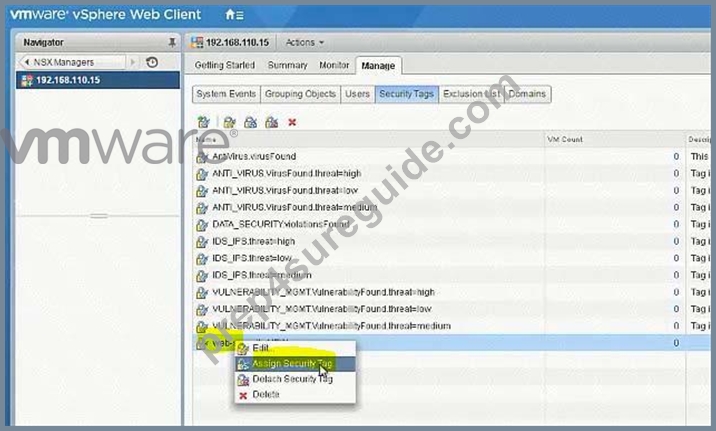


Create new Security Group = Secure-Web-NEW
In security tag put equal


Create new Security Policy as per given details:
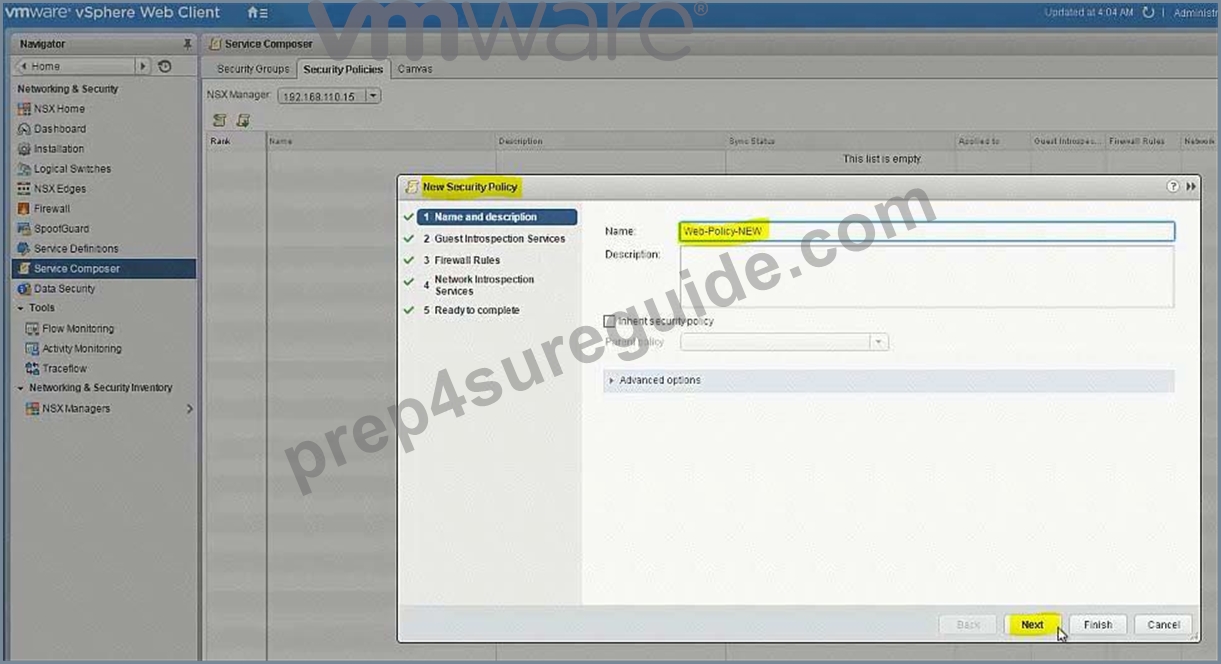

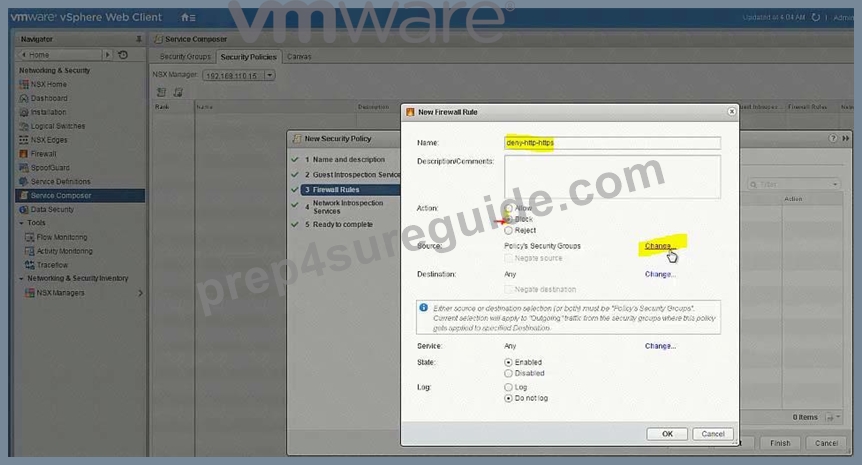


Right Click -> Apply Policy ->


NEW QUESTION 14
Management has approved an expansion of the virtual infrastructure. You have been tasked to prepare Cross vCenter configuration with the second vCenter Server. Another administrator has provided a pre-configured vDS configuration file located on the Control Center Server. All identifiers must be maintained.
Requirements:
vCenterB server: vcsa-01b.corp.local
Credentials: [email protected] / VMware1!
vCenterB VAMI Credentials: root / VMware1!
Cluster: Computer Cluster 1B
ESXI Hosts: esx-01b.corp.local, esx-02.corp.local
Platform service controller: psc-01a.corp.local(192.168.110.9)
NSX Manager: nsmgr-01b.corp.local (192.168.210.15)
Credentials: admin / VMware1!
Time Zone: US/Pacific
*Configure nsmgr-01b.corp.local for vCenterB and psc-01a.corp.local
*Ensure nsxmgr-01b.corp.local uses the same NTP server as psc-01a.corp.local with a US/Pacific TimeZone.
*Import the new vDS configuration vds-site-b-Compute-New.zip
All identifiers must be maintained.
*Assign the remaining two used vmnics for the ESXi hosts to the newly imported vDS.
NOTE:
Do not migrate VMkernels from the standard switches on the hosts.
HOL LAB for Practice:
a http://docs.hol.vmware.com/hol-isim/HOL-2019/hol-1903-01-nsxinstall-p1.htm HOL-1903-01 Page 16 or you can directly Open a NSX manager in the lab and edit the existing settings bOpen PSC and NSX manager in HOL-1903-01 and look for NTP Server loand cation cExport existing vDS config and Import back the config for practice in HOL-1903-01 dNo Lab Module available See the explanation part for complete solution.
Answer:
Explanation:
SOLUTION:
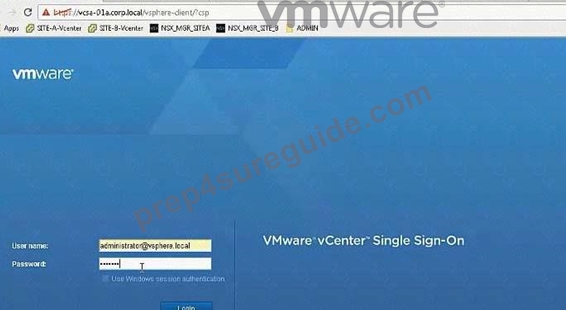
Step 1: Login to PSC using VAMI credentials and note down the time zone and server details and use the same in SiteB NSX Manager time settings.
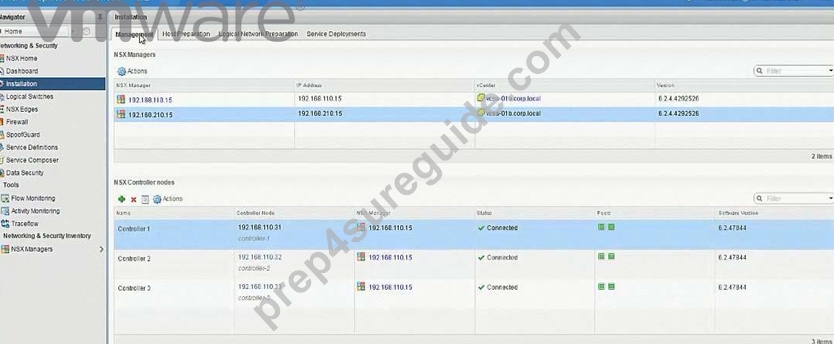
Step 2: Update the time settings, complete lookup service configuration, associate SiteB NSX manager to SiteB vCenter. Check the status from SiteA vCenter Webclient -> Networking & Security -> Installation -> Management.
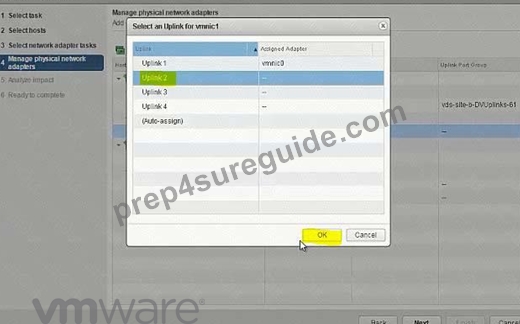
Step 3: Import the Distributed switch to Cluster B, add the hosts & assign the interfaces.
Login to https://psc-01a.corp.local:5480/ to check the NTP server details and note it down. Use the VAMI credentials given to login. Need to click on Edit to see the server details in here as it is not showing up in the main page (In exam, it is showing in the main page itself).


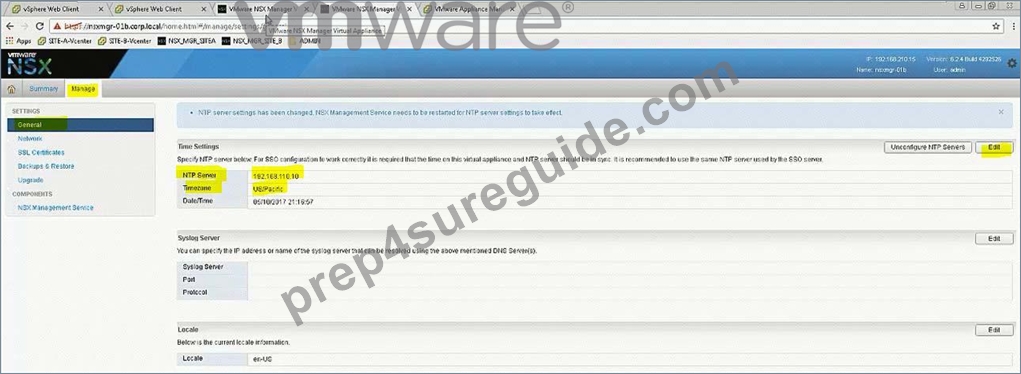
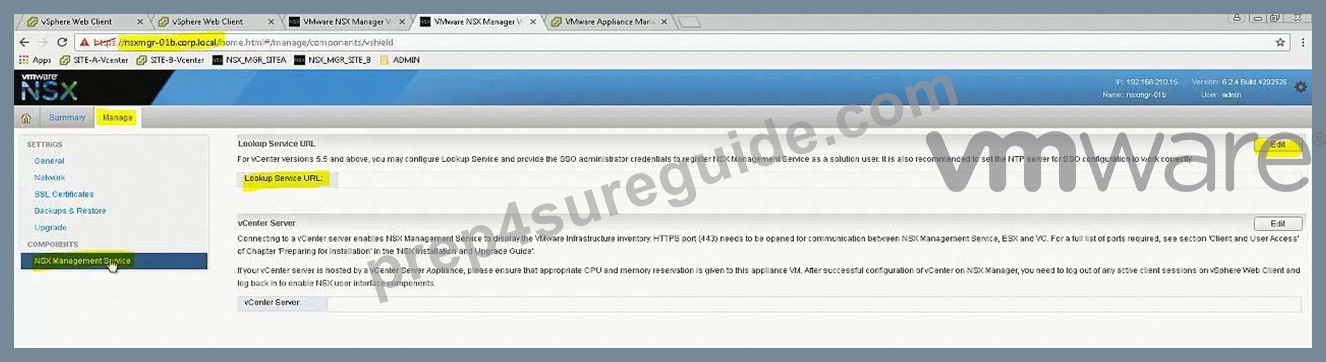

Important NOTE:
In exam change Lookup Service Port according to NSX Manager of Site A which is working one.
It's 7444 in exam.


Click refresh if in case it shows as disconnected.
Login to SiteA vCenter using Web Client and confirm the status of both the NSX Managers: Installation -> Management.




NEW QUESTION 15 
Questions HOL LAB Modules and Pages for practice
1
http://docs.hol.vmware.com/hol-isim/HOL-2019/hol-1903-01-nsxinstall-p1.htm HOL-1903-01 Page 16 or you can directly Open a NSX manager in the lab and edit the existing settings bOpen PSC and NSX manager in HOL-1903-01 and look for NTP Server loand cation cExport existing vDS config and Import back the config for practice in HOL-1903-01 dNo Lab Module available
2
http://docs.hol.vmware.com/hol-isim/HOL-2019/hol-1903-01-nsxinstall-p2.htm and LAB - HOL 1903-01 Page 26-36
3LAB - HOL 1903-01 Module 2 - Page 37-38
4LAB - HOL 1903-01 Module 4 - Practice and understand whole module Bridging and other questions 7,
8, 9 and LAB - HOL-1925-02 Module 1
5LAB - HOL 1903-01 Module 4 - shows how to deploy NSX Edge, you can also deploy Distributed logical router DLR in the same way the lab.
6LAB - HOL 1903-01 Module 3 - Practice and understand the whole module, it will be use full for other question like 20 and 22
7LAB - HOL 1903-01 Module 4 - Practice and understand whole module Bridging and other questions 7,
8, 9
8LAB - HOL 1903-01 Module 4 - Practice and understand whole module Bridging and other questions 7,
8, 9
9LAB - HOL 1903-01 Module 4 - Practice and understand whole module Bridging and other questions 7,
8, 9
10LAB - HOL-1903-02 Module 1 and 2
11LAB - HOL-1903-02 Module 1 and 2
12LAB - HOL-1903-02 directly follow the steps in this document for practice
13LAB - HOL 1903-01 - open an NSX manager in LAB and directly follow the steps in this document.
14LAB - HOL 1903-01 - open postman in the lab and directly follow the steps in this document.
15LAB - HOL 1903-01 - directly follow the steps in this document for practice.
16LAB - HOL 1903-01 - directly follow the steps in this document for practice.
17LAB - HOL-1925-02 Module 1
18LAB - HOL-1925-02 Module 1
19 LAB - HOL-1925-02 - directly follow the steps in this document for practice.
20LAB - HOL 1903-01 Module 3 - Practice and understand the whole module.
21No Lab Module available
22LAB - HOL 1903-01 Module 3 - Practice and understand the whole module.
23LAB - HOL 1903-01 - open postman in the lab and directly follow the steps in this document.
(Exam Topic 1)
Two administrators (John and Chris) share admin responsibilities for an NSX deployment that is leveraging Centralized CLI as part of their management. Security requirements prohibit use of shared admin accounts in Site A.
Requirements:
NSX Manager: nsxmgr-01a.crop.local
New administrator accounts: "John" and "Chris"
Default password: VMware1!
Create accounts for John and Chris.
Use one of the newly created accounts to display all clusters enabled for the distributed firewall.
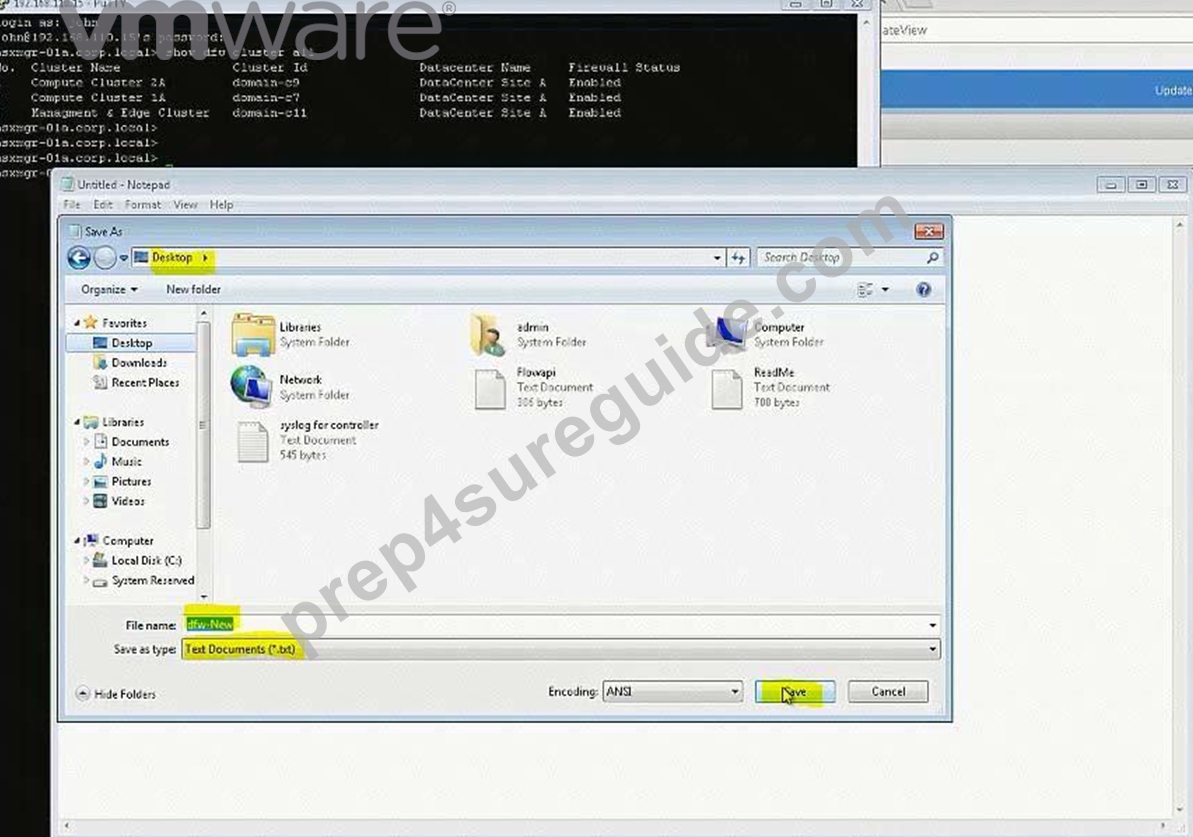
Use Putty's "Copy All to Clipboard" feature to paste the command and output to a text file dfw-NEW.txt on the ControlCenter desktop.
NOTE:
Screenshot is shown on how to use Putty's Copy all to Clipboard feature.
HOL LAB for Practice:
See the explanation part for complete solution.
Answer:
Explanation:
SOLUTION:
13:(1) select vccenter - a. select datacenter A and click right mouse button select administrator. select user and groups click on + sign. select user tab enter user name john password VMware1!. click ok . do same for chris.
(2) select datacenter A.
select manage tab. select permission. click + Sign. select Read Only from Assign Role. select All Privileges click on Add. select John and chris.checked Propagate to childern and click on OK.
(3) go NsX Manager. select Nsx Manage-a. select manage select user from tab. click + sign. select identity user. check specify vcenter user. enter user name [email protected] click next. select role Nsx Administrator. click finish. do same for chris. but use [email protected] and assign role of NsX administrator click finish.
6 of 336
Enable
VMware1!
Conf t
User john password plaintext VMware1!
User chris password plaintext VMWare1!
Exit
Write memory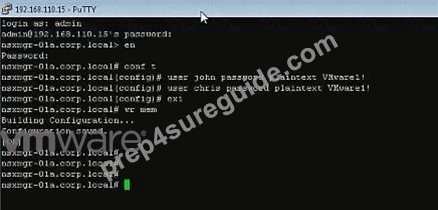
Open new Putty session or Duplicate Session:
john
VMware1!
Show dfw cluster all

Ctrl+V don't work in exam.

NEW QUESTION 16
Provide cross vCenter security functionality for the Universal Web Multi-Tiered network application.
Requirements:
vCenter: vcsa-01a.corp.local
Credentials: [email protected] / VMware1!
New Section Name: Universal-Rules-New
Networks:
Web-Tier: 172.17.10.0/24
App-Tier: 172.17.20.0/24
DB-Tier: 172.17.30.0/24
Secure east/west network communication for each of the three tiers allowing only.
Firewall Rule section Name: Universal-Rules-NEW
Web Tier: any source address incoming on TCP port 80 and 443
Application Tier: access from the web tier on the incoming TCP port 8443 Database Tier: access from the application tier on the incoming TCP port 3306 Traffic that does not meet the above requirements should be blocked.
NOTE:
This rule must only affect the universal tiers.
HOL LAB for Practice:
See the explanation part for complete solution.
Answer:
Explanation:
SOLUTION:
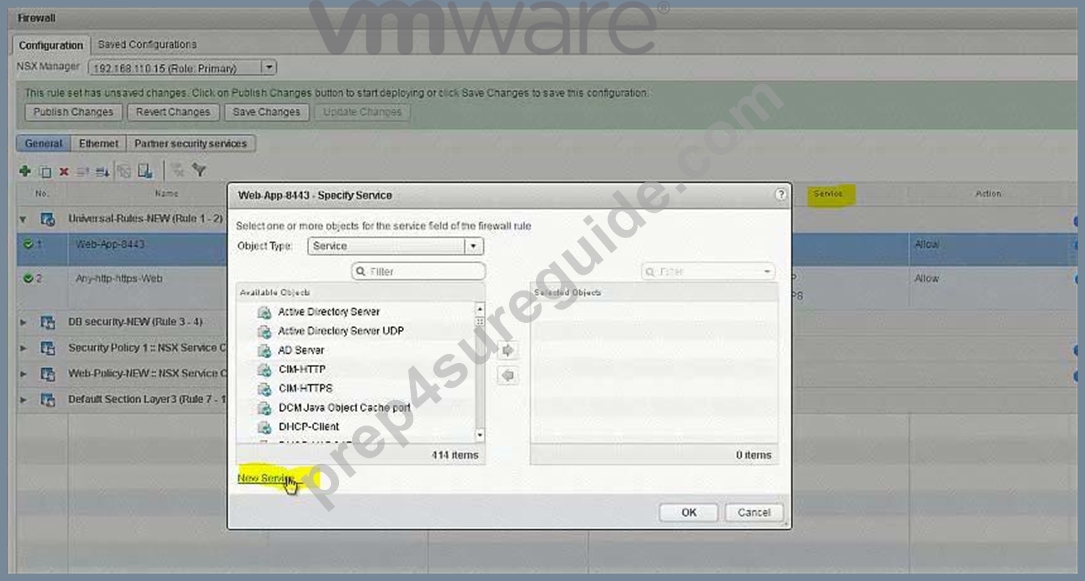
Add new Section under Firewall.
Universal-Rules-NEW
Add rules:


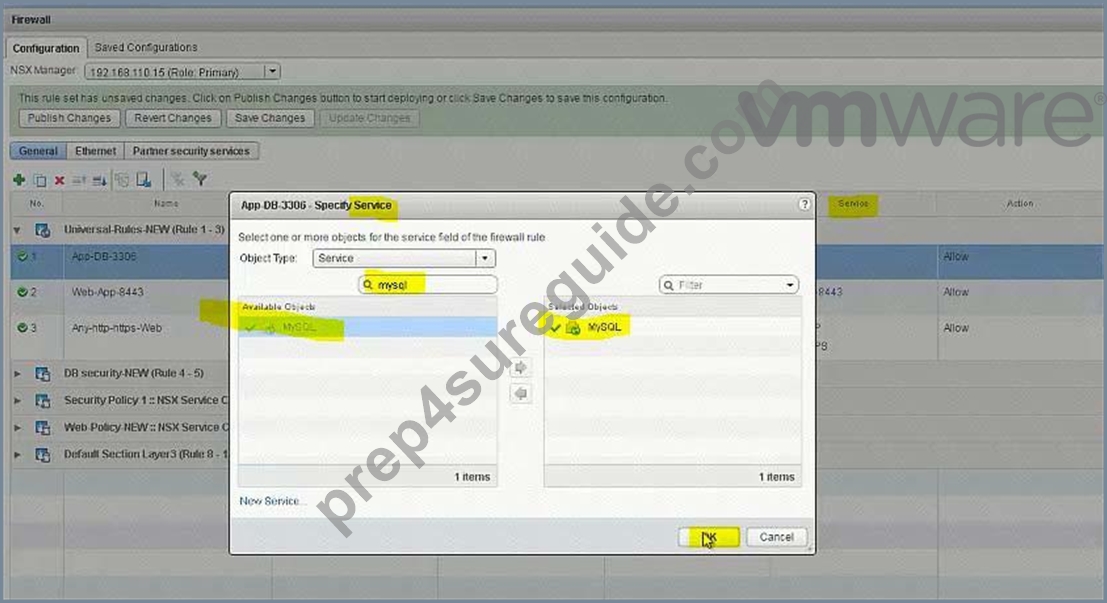
Add another Rule:



Add another Rule:



Add Deny Rule: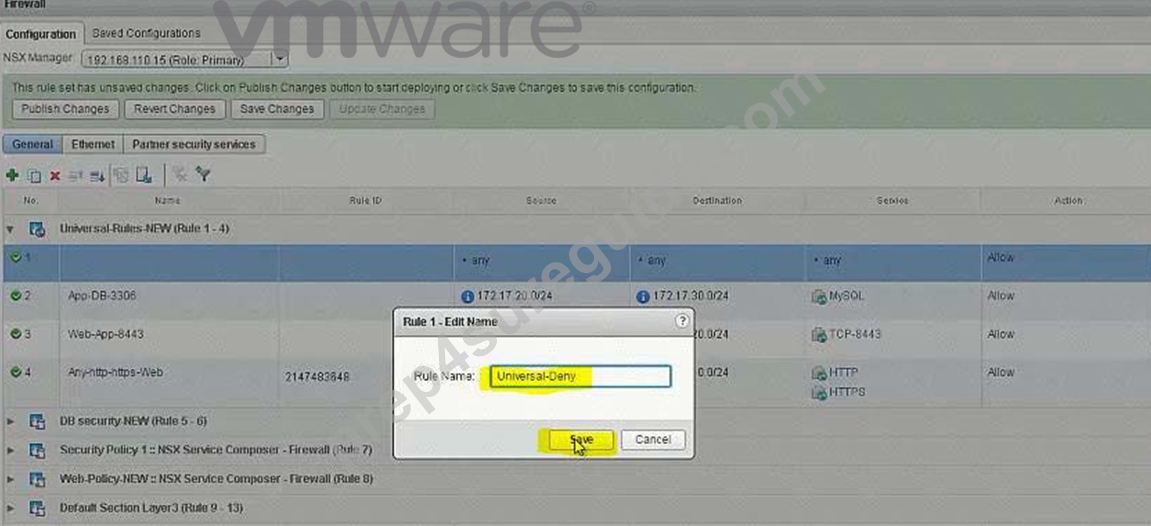


Lower down the Deny rule to the end in this section:

NEW QUESTION 17
The security team has submitted two requests to change or limit access in NSX for Site A's vCenter groups.
Requirements:
NSX Manager: nsxmgr-01a.corp.local
vCenter: vcsa-01a.corp.local
Credentials: [email protected] / VMware1!
Grant all members of vCenter group AuditTeam the minimal access necessary to view NSX Data Security policy configurations for all objects in Site A.
Grant all members of vCenter group ScanTeam the minimal access necessary to enable them to start and stop data security scans in Site A.
Ensure that the principles of least privilege are adhered to.
NOTE:
The Active Directory groups associated with the vCenter groups has already been preconfigured.
HOL LAB for Practice:
See the explanation part for complete solution.
Answer:
Explanation:
SOLUTION:
select Home. select administrator. select domain vsphere.local. select groups.
click + sign. enter group name AuditTeam click ok. do same for ScanTeam.

[email protected]


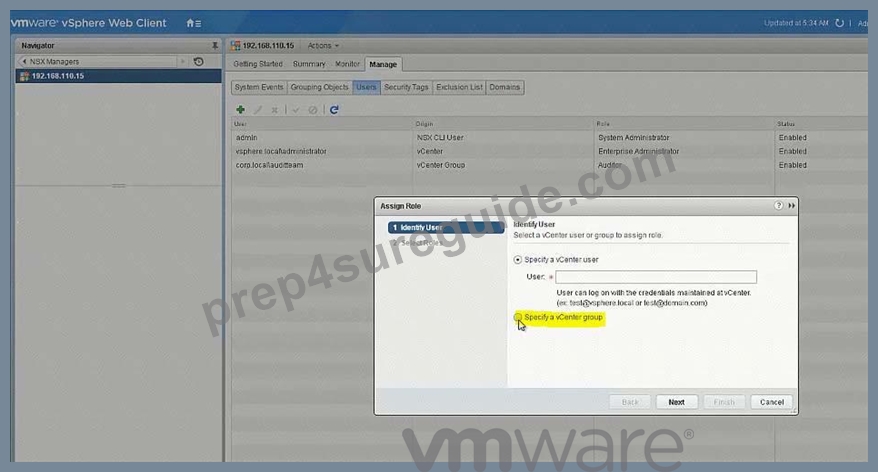
[email protected]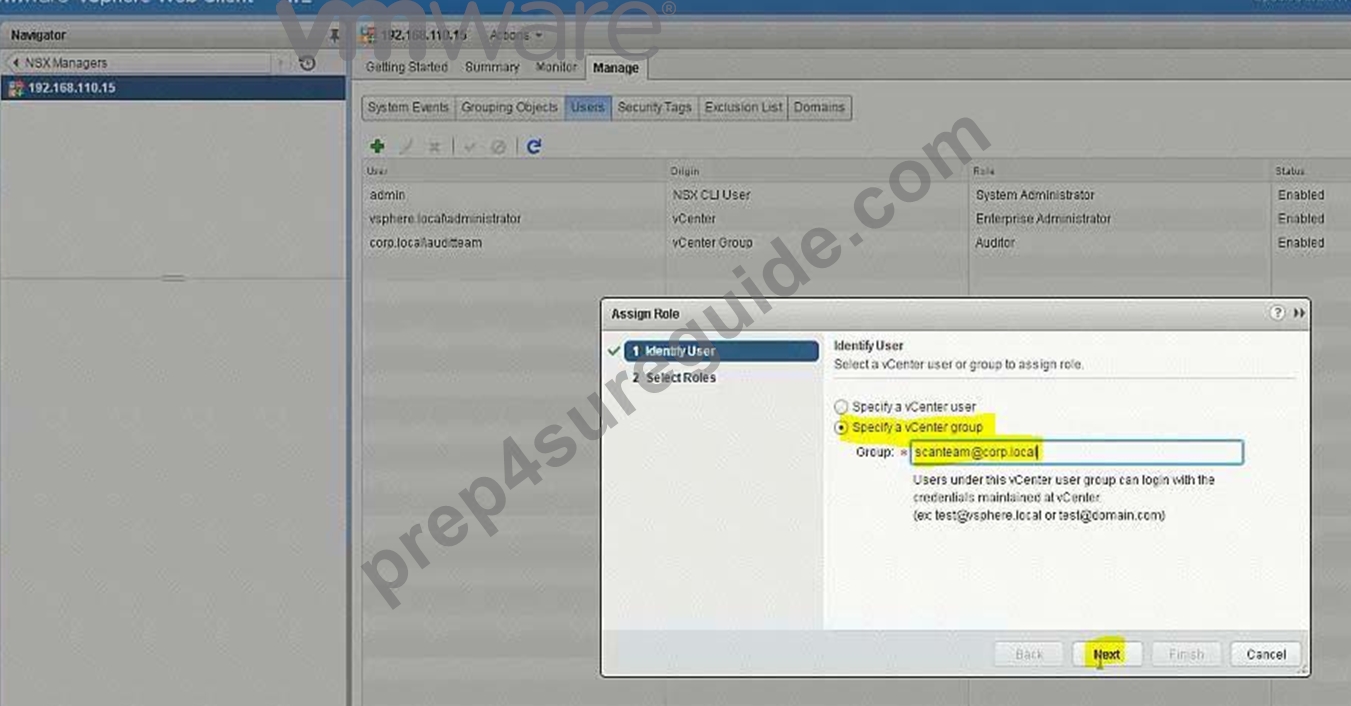
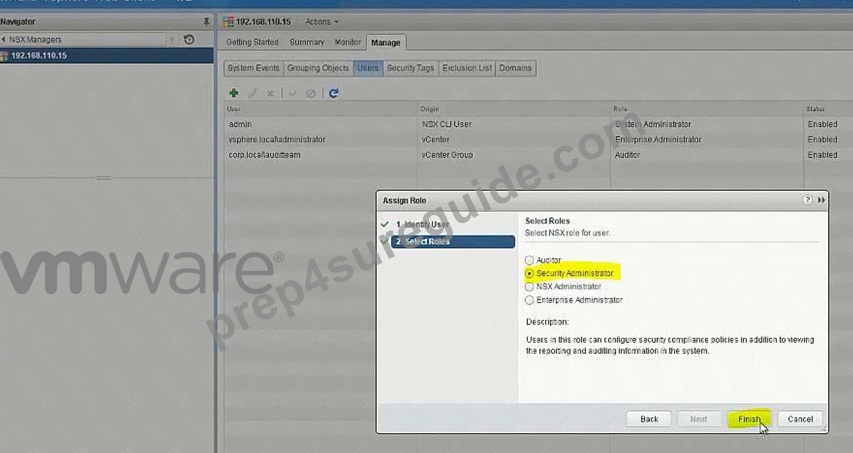

select datacenter A.
select manage select permission click on + Sign.
select Assign role read only. select all privileges click on Add
select AuditTeam and select ScanTeam. check propagate to childern. and click ok
NEW QUESTION 18
Complete the configuration of Dev-Edge to allow north-south routing connectivity for the new Dev-segment.
Workloads will have overlapping IP addressing with production workloads. The developers will RDP into a jump host server (Dev-Jumphost) on the Dev-Web segment. An RDP shortcut named To Dev-JumpHost.rdp has been created on the ControlCenter Desktop.
The following has been preconfigured on Dev-Edge:
The uplink interface on the Dev-Edge has been pre-configured to communicate the upstream Gateways and attached to Dev-to-PGs-Transit.
Dev-DLR-NEW and Dev-Edge interfaces have been preconfigured to communicate with each other.
ECMP has been disabled.
Requirements:
vCenter: vcsa-01a.corp.local
Credentials: [email protected] / VMware1!
Dev-Jumphost information:
Credentials: administrator / VMware1!
Internal IP of Dev-Jumphost: 172.16.10.100
External IP of Dev-Jumphost: 192.168.5.100
Connection Information:
Dev-Edge-Uplink IP: 192.168.5.3/24
Dev-Edge-Internal IP : 192.168.6.6/30
Preimeter-Gateway-01-Internal IP: 192.168.5.1/24
Preimeter-Gateway-02-Internal IP: 192.168.5.2/24
Logical switch: Dev-to-PGs-Transit
ECMP: Enabled.
BGP AS: 65001
Credentials for all Edge Devices: admin / VMware1!VMware1!
The networking team requires BGP as a routing protocol with an AS of 65001 for North-bound access for the Dev-environment.
Use the fewest number of static routes and utilize network prefixes to ensure accessibility to the Dev-Web-Tier-01-NEW within the Dev-environment.
Ensure Dev-Jumphost is on Dev-Web-Tier-01-NEW.
Ensure the ability to RDP into the Dev-Jumphost server from the production network (ControlCenter).
HOL LAB for Practice:
module, it will be use full for other question like 20 and 22
See the explanation part for complete solution.
Answer:
Explanation:
SOLUTION:

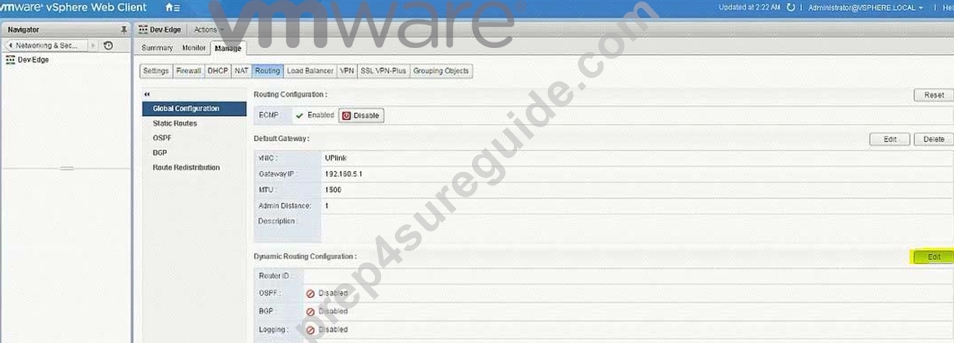


Static Routes on Dev-Edge:
Network:172.16.0.0/16
Next Hop:192.168.6.5
Interface:Dev-Transit




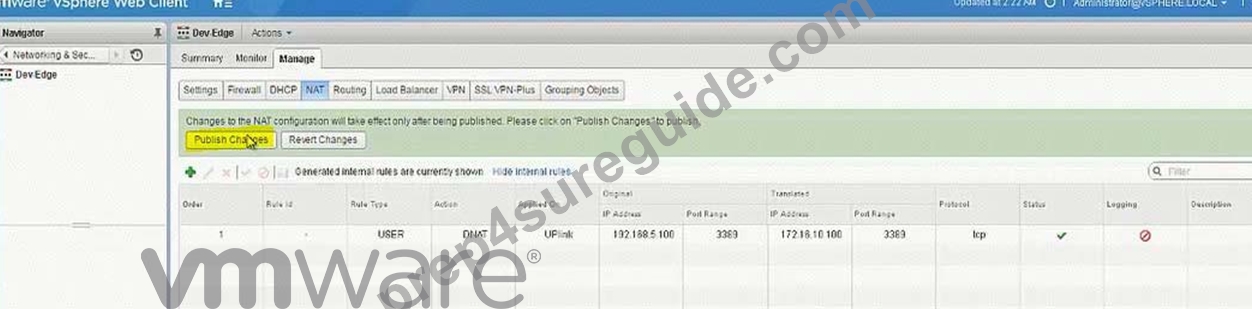
Uplink
192.168.5.100
Tcp
3389
172.16.10.100
3389
(1) Go to Vcenter-a. select network & Security. select NsX Edge.
(2) check the PGW01 configuration if everything is ok no need to do any changes specially ip address and routing. if not than select PGW01. select Manage. select routing select global configuration and enable routing. click publish changes.
be sure ECMP is enabled.
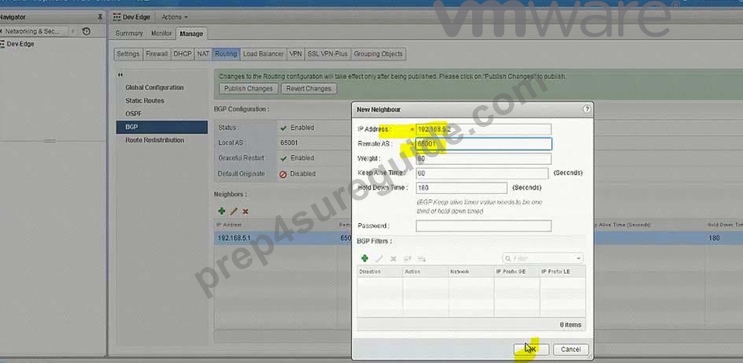
select BGP Configuration. click edit. select enable BGP, select Enable Graceful restart (select enable Default originate). enter AS 65001 click ok click publish changes


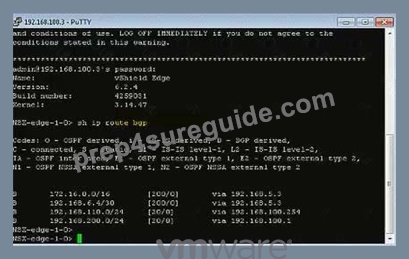
SSH to both Perimeter Routers and verify BGP neighborship.
Username: admin
Password: VMware1!VMware1!
Add jumphost VM to Dev-Web-Tier-01-NEW Logical Switch


NOTE:
192.168.5.100 interface is created in the next task only. So after testing the next task output, you should be able to get the RDP login.
NEW QUESTION 19
......
Objective 1.2 â Prepare Host Clusters for Network Virtualization:
- Prepare vSphere Distributed Switching for NSX
- Configure the appropriate teaming policy for a given implementation
- Configure VXLAN Transport parameters according to a deployment plan
- Prepare a cluster for NSX
- Add/Remove Hosts from cluster
Use Valid New 3V0-643 Test Notes & 3V0-643 Valid Exam Guide: https://www.prep4sureguide.com/3V0-643-prep4sure-exam-guide.html